How do you rate a disc golf course?

By Jack Trageser — Rattling Chains staff

Beauty is in the eye of the beholder, right?

It is true of most things to which the words “subjective” and “opinion” may be applied. And so it is with disc golf courses, as well. When I read user-submitted course reviews on dgcoursereview.com, it’s clear that different people value different features in a disc golf course.

Disc golf courses can be quite unassuming.

Some of the most popular — and most famous — are almost invisible to the uninformed eye when not populated with clusters of people flinging bright colored flying discs. That is because one of the elements of disc golf of which its practitioners and proponents are most proud is its ability to conform to nearly any hikeable environment — with minimal or no alteration. In fact, for a large part of the disc golfing population, the more rugged, the better.

And then there are those — no less ardent in their love of the sport — who highly value open, flat fairways where their discs can soar unimpeded by the “thwack!” of a tree and have no chance of plummeting into a deep, dark brambly chasm.

It’s all a personal preference.

Some players like a remote course that is so removed from the hustle and bustle of civilization (and, they might say, the watchful eyes of Big Brother) that having to hike half a mile on foot just to reach it is a bonus. For others, that would be a deal-killer. They want convenience, safety, and even supervision, and couldn’t care less if the park is shared with other users and bordered by streets with cars constantly zipping by.

For some folks it’s all about the equipment.

If a course doesn’t have some type of permanent teepads and baskets (as opposed to posts or other objects), they have zero interest in playing it. On the other end of the spectrum, I know people who still regularly play courses like Old Sawmill in Pebble Beach, Calif., or Little Africa in Carmichael, Calif., even though neither has regular targets or teepads. They do so because the courses are set in amazing places, convenient to them, and/or consist of great hole designs. But they obviously don’t mind the lack of official equipment.

So what makes a course great in your eyes?

Personally, I break it down into two broad categories: courses that I can play on a regular or semi-regular basis (home courses), and courses I may only get to play once or twice (road courses).

Continue reading

Six months with Rattling Chains — what’s next?

By P.J. Harmer — Rattling Chains staff

So the answer has to be given … did we rattle the chains?

As readers will remember, we came out of the gate quickly when we started six months ago. We were super pumped and the possibilities were endless. The ideas that were being thrown around were plenty.

When we initially started this blog, we said we’d revisit it in six months. At that point, we’d decide if we wanted to continue or shut it down. As someone who has been a writer for most of my professional life, I didn’t want to let the blog go to hell. If we weren’t doing well, we’d shut up shop and move along.

But it wouldn’t come without a fight, that’s for sure.

Over the course of the first half year, we’ve had some ups and downs. We started quick, we slowed up, things looked bleak and we’ve kind of bounced back.

We also got lucky to get some quality contributors right off the bat in Jack Trageser and Steve Hill. Since then, we’ve added Andre Fredrick and Jenny Cook. We also have a few people who have submitted things to us here and there, giving us some great things.

What I’ve really liked about this blog is all those different voices. From men to women, we’ve tried to give what we can.

This three-day schedule on a weekly basis hasn’t been the best for visits, however. And that’s understandable. After all, if there are fewer stories, people won’t come back every day.

That meant is was decision time. We’re at that six-month point. So what to do?

Do we continue?

Continue reading

Poll 26: Is disc golf really a cheap sport? Spending habits on notice!

Is disc golf really a cheap sport?

We know that most courses are free. And once you have a couple of discs you should be good to go, right?

I mean, how much more could this game take in regard to spending money?

That’s what we’re here to find out. I’ve talked to so many people recently about the money spent on this game. Equipment. Tournament fees. Travel expenses. Leagues.

It all adds up if you are highly into the game.

We’ll get back to all that in a moment, though. First, I’d like to re-visit last week’s poll to see what people thought about a little football.

Turns out not many people change their disc golf routine because of football season.

Of the 87 people who cast votes this week, 63 percent (55 votes) said no. The other 37 percent (32 votes) said yes.

Personally, I don’t plan anything around football. If I’m home, I’ll flip it on. But if there’s something else I wanted or planned to do, including disc golf, I’ll catch the score/highlights and everything else later on.

Let’s see what some readers had to say.

Continue reading

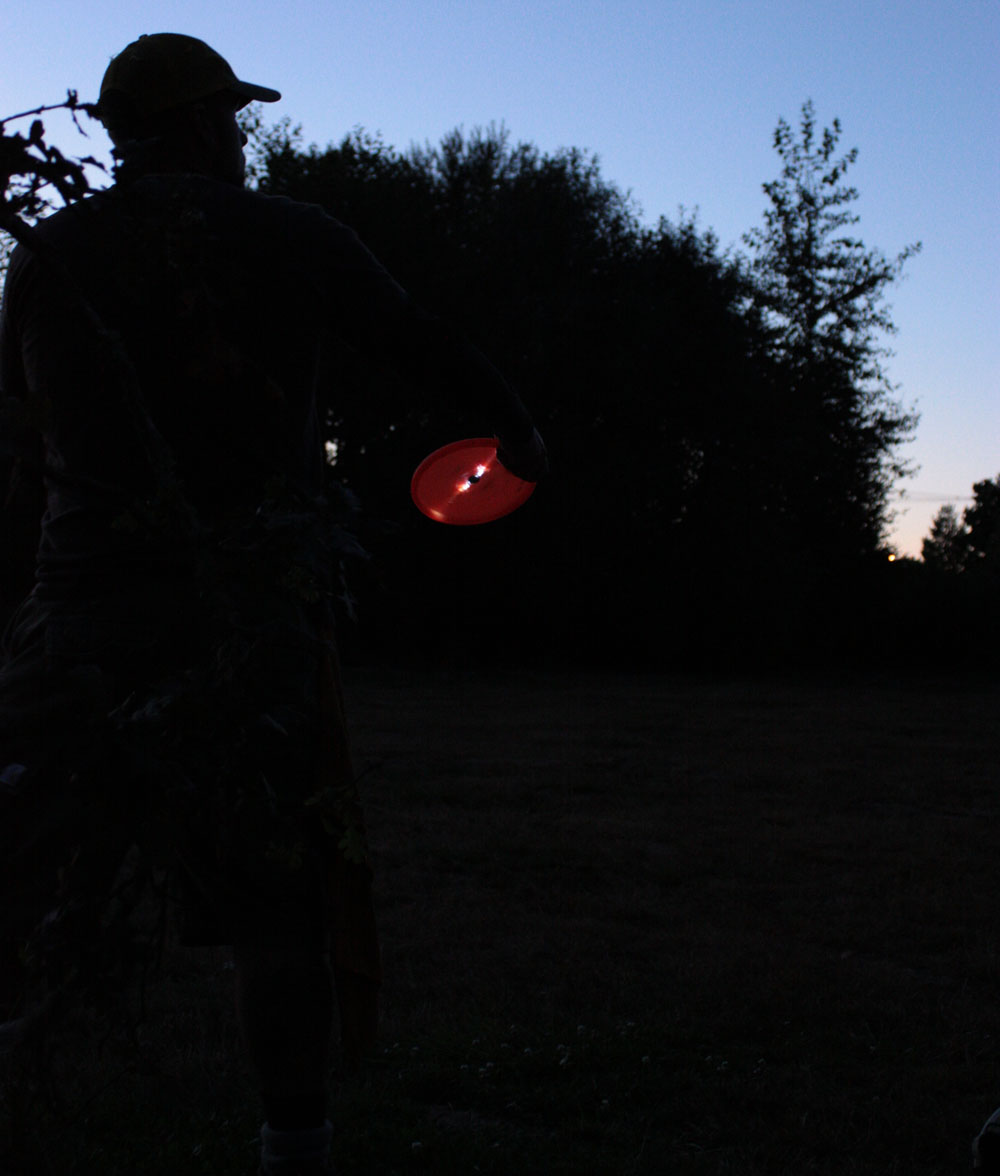
Playing at night can be a fun way to change your game up

Glow discs, like these, are one way to play night golf. Having LED lights on the disc is another.

By Andre Fredrick — Rattling Chains staff

One of my fondest disc golf memories has to be visiting Minnesota and playing my first round of night golf.

It was a defining moment that changed my feelings about the sport. If you haven’t tried it, you should. If you have, you still might find this guide helpful on your next nocturnal outing.

Night golfing can be a frustrating experience for those who are under-prepared.

Preparing for a throw during a night-golf outing. (photo by Michael Owskey).

I realized this after losing a friend’s glow disc and spending 45 fruitless minutes searching for it before calling it a night. I never found the disc. A sour experience can easily turn even the most enthusiastic of us off of night golf.

When done right, playing at night can be one of your most memorable disc golf experiences, so let’s get you prepared.

First, you need a course that allows for night play.

For example, my local course closes at dusk and enforcement is pretty heavy. As much as I have been tempted to sneak out and try to play a round after hours, trespassing is never a good idea. So don’t do it. Check with city or state offices to see if public courses are open after dark to make sure you’re allowed to be out there. If your local course is privately owned, check with management to see if it’s something they support.

Now that you’ve avoided a trespassing charge, remember safety. This list is by no means definitive, but the following items are good to have.

Continue reading

Book Excerpt 2: Now is the time for disc golf to shine

By Jack Trageser — Rattling Chains staff

The previous excerpt of my upcoming book hopefully accurately captured the essence of golf, what makes it such a singular sporting activity, and why both versions of golf share the remarkable qualities.

Next up is a point-by-point discussion of where the two sports are starkly different, and why those differences position disc golf as the golf of the future. Today the discussion focuses on the economics of golf and disc golf.

The Economics of Golf

For all but maybe five percent of the world’s population, cost alone is a nearly insurmountable barrier. Even leaving out of the discussion those hundreds of millions in developing and/or impoverished countries for whom any leisure activity will never be a consideration during their lifetimes, golf simply costs too much.

In a 2008 report written for Yahoo! Sports titled “The cost of public golf,” Sam Weinman wrote “The average cost of greens fees for a course built before 1970, according to the National Golf Foundation, is $42.70. The average, however, for one that was constructed between 1970 and 1990 is $48.33, and $60.55 for those after 1990.”

In the same article, former USGA president Sandy Tatum is quoted as saying “The question is do you have affordable access to golf, and on too many fronts, the answer is no.”

Even in the most prosperous countries, $50 for an afternoon of recreation is too expensive for an average member of the population. In countries like Thailand, where total average annual income in U.S. dollars is less than $5,000, it’s not even an option for anyone but the richest of the rich.

Continue reading

Poll 25: What’s football season do to your game?

Hut, hut, hike!

It’s that time of year. Football, football, football! College football on Saturdays and the NFL on Sunday.

Parties, cookouts (while it’s warm enough), tailgating and whatever else you might do with football season.

But does it take a toll on your game?

We’ll get back to that shortly. First, let’s check out last week’s poll.

Basically, I was trying to find out how much some people have spent on discs, whether it be collecting or whatever. However, we had some crazy choices and I think I probably merged the possibility of three polls into one.

So the odds are we’ll probably revisit these polls down the line and split them up.

Of the 425 people who cast a vote (or two) in this poll, 51 percent (216 votes) overwhelmingly said they only buy discs they play with. That says something to me right there — plastic was made for throwin’.

In regard to how much people have already paid for a disc, 23 percent (96 votes) said they had paid more than $25 for a disc. That was followed by more than $50 for a disc (10 percent/43 votes); more than $100 (4 percent/18 votes) and more than $250 for a disc (2 percent/8 votes).

On the other side, 28 voters noted they’d pay more than $25 for a disc. Following that was willing to pay more than $50 and $100, which were tied with seven votes each.

Continue reading

Product Review: Disc Beeper

By Jack Trageser and P.J. Harmer — Rattling Chains staff

It seems that as disc golf equipment technology evolves, much of the advances are slight, such as a disc that flies slightly faster or farther, or a basket that has chains that hang at different angles.

Even in the world of accessories, nearly all products hitting the market are manufactured versions of do-it-yourself gadgets, such as telescoping poles to retrieve discs.

The Disc Beeper is something entirely new and it solves a problem every disc golf encounters at some point — a lost disc. Despite the fact that numerous people have probably mused a concept such as this, nobody has every built it.

The Disc Beeper is a small electronic device with the diameter of about a quarter. It’s light (about six grams) and attaches to the bottom of a disc. When activated, it beeps at three-second intervals after a 45-second delay.

The current model is a permanent attachment to the disc, so it would not be allowed in PDGA-sanctioned events.

The following is a joint review by Rattling Chains writers Jack Trageser and P.J. Harmer.

Continue reading

Poll 24: How much is too much for a disc?

OK, there’s been a lot of things I’ve read about collectible discs.

I know of several people who have spent many dollars on discs to add to their collections. And I shake my head in wonder over this. But, we’ll get to that in a moment.

For now, let’s peek back to last week’s poll. We were curious how long of a break you had taken from disc golf. It could be for any reason, but since becoming a disc golfer, what kind of breaks have you taken?

We had 103 voters in this poll and the winning selection was two weeks, which scored 29 votes (28 percent). Second place went to a year or longer with 19 votes (19 percent). One month tied with 2-3 months for the next spot (17 votes/17 percent), followed by 4-5 months (11 votes/11 percent) and 6-11 months (10 votes/nine percent).

It seems people, too, had different reasons for their breaks. Let’s see what some of the readers had to say.

Continue reading

Parting with plastic brings different results and feelings

By Jenny Cook — For Rattling Chains

A disc’s life starts off in a manufacturing plant somewhere in America, and for the ones that end up in our disc golf bag, each has a story as to how it got there.

Was it purchased at a local disc golf store, won at a tournament, given to you by a friend, or found on a disc golf course? Over time, some of these lucky discs become our go-to discs — our absolute favorites to throw.

So if that disc you simply can’t live without ends up in a murky pond, how long would you spend searching for it? The majority of the disc golf population probably wouldn’t hesitate to grab a rake and start scraping bottom, searching until the sun went down — or came up. I’ve even seen lost-disc flyers
posted at courses with “reward if found” written in big, bold letters.

Facebook and the social forums on dgcourseview.com also allow us to reach out to the locals with pleas, like, “I lost my disc on hole No. 4, in
the rough somewhere. Keep your eyes open for my Valkyrie please! Call if found. Reward!”

We love the plastic that’s in our bag and would do almost anything for it.

There can be risks involved in fighting to get our loved ones back. My husband once found himself in the position of raking the bottom of a pond in search of his putter — his favorite putter.

As he crossed a slick fallen-down log acting as a bridge, he slipped and landed on a branch — X-rays later that night showed he had two broken ribs and a punctured lung. Two weeks later, including three chest tubes and a
thoracotomy, he was released from the hospital. A full recovery has been made since then and up until this last July, his putter stayed in that unforgettable stench of a murky pond in Joliet, Illinois.

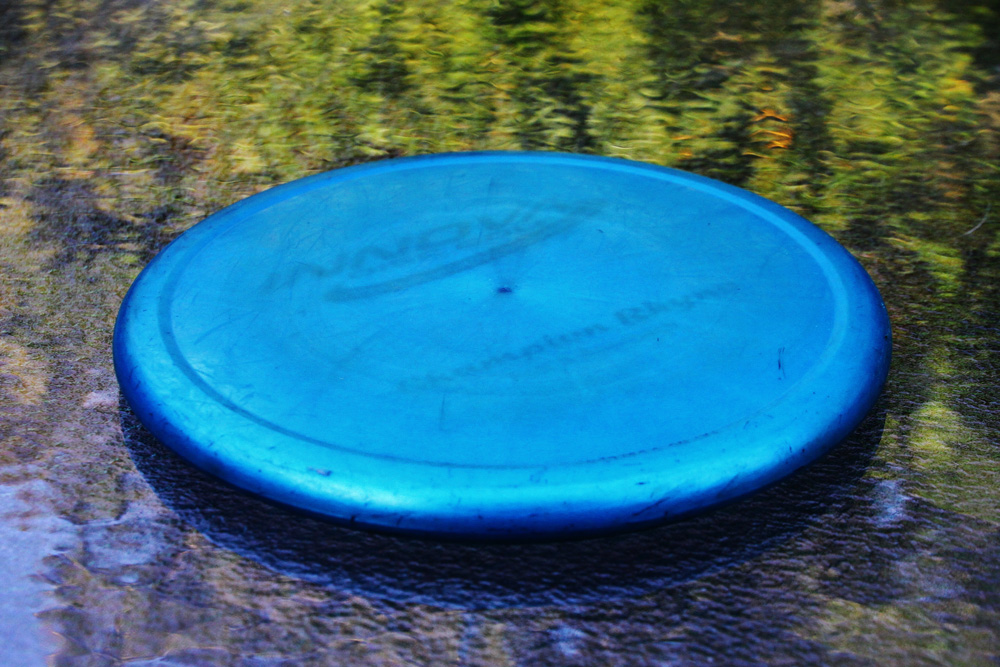
The blue Champion Rhyno was recently found among hundreds of other discs and, after a phone call, it made its way back into his hands. His favorite Rhyno now hangs on the wall. Two years later, the story is now complete because of that phone call.

Continue reading

Book Excerpt: Why golf is great, and why in the 21st century disc golf is better

By Jack Trageser — Rattling Chains staff

It is my firm belief that the sport of disc golf — which already has enjoyed strong, steady growth for more than two decades — will experience an explosion in popularity when two things happen:

  1. The general public is properly educated about the true nature and accessibility of disc golf, and all the nuances that make it so much more like traditional golf than most people assume to be the case (the variety of discs and throws, the effects of wind and terrain, etc.).
  2. Disc golf reaches a ‘tipping point’ in terms of popular opinion, triggered by either a critical mass of popular culture/media recognition or a handful of random watershed moments. For instance, if a super-famous person suddenly lists disc golf as their favorite activity, or a TV show, website, or publication with millions of fans features it prominently.

Now, it is altogether possible that a famous person will stumble across disc golf at any time, fall in love with the sport, and by sharing his or her passion for the sport do more to promote it in one day than all other players combined have done up to that point. But unless there is some exhaustive source of correct, detailed, and compelling information available that explains the many different reasons why people that have played it love it so much, chances of that watershed moment resulting in anything but a temporary fad are minimal.

Those seeking the truth about the sport will find nothing substantial — or worse, the misinformation and oversimplifications that currently exist. My goal is to fill that void and have answers to the inevitable questions ready and waiting in a book, for the day the dam breaks.

I’m writing a book that aims to make the two events numbered above much likelier to occur, as well as making the inevitable explosion of disc golf a mere launching point for something with staying power. The book will include chapters that discuss the history, finer points, unique grassroots growth, and formats of the sport, among others. But the unifying theme is a very specific sales pitch for disc golf, and it’s established in the first chapter and repeated throughout:

Continue reading